Urgent rescue and relief operations are intensifying across Nepal. Severe Nepal Flash Floods, triggered by exceptionally heavy monsoon rains, continue to cause widespread devastation across multiple regions. Authorities are grappling with the 2026 monsoon season's intensity. They report a rapidly rising number of casualties, hundreds of thousands displaced, and significant infrastructure damage. This prompts urgent calls for international assistance. The impact of these Nepal Flash Floods is profound, affecting both human lives and the nation's development trajectory.
Urgent Rescue Efforts Amidst Devastating Nepal Flash Floods
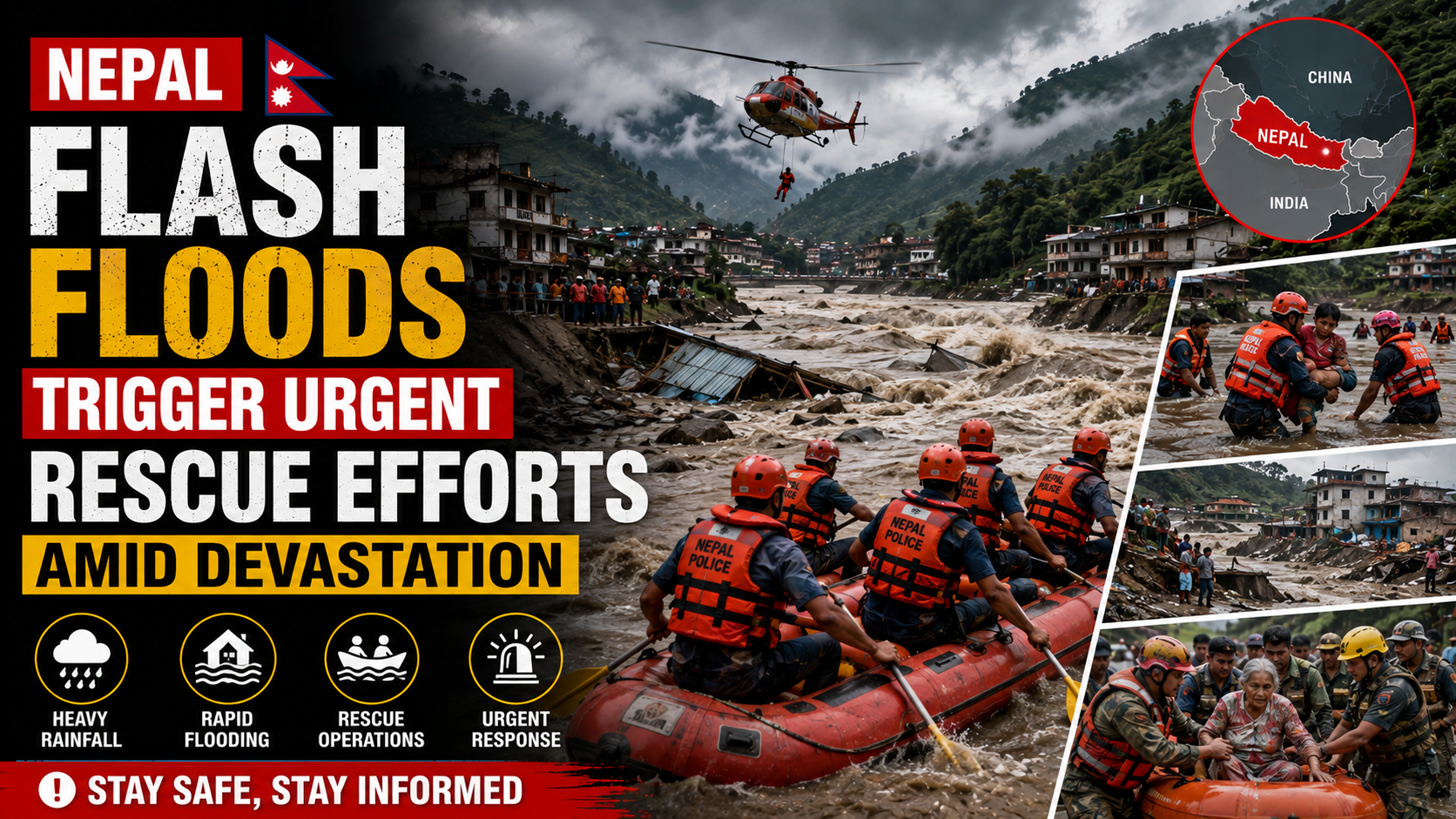
As the full scale of the disaster unfolds in late July 2026, the primary focus remains on search and rescue missions. These are particularly vital in the hardest-hit districts of the Terai plains and vulnerable hilly regions. Relentless downpours have submerged vast areas. They isolate communities and make access challenging for emergency responders. The government has activated its full disaster response mechanism. It prioritizes the evacuation of stranded individuals and the delivery of immediate aid to survivors. Moreover, it aims to restore critical services where possible.
Military and Civilian Teams Mobilized for Life-Saving Operations
The Nepal Army, Nepal Police, and Armed Police Force (APF) have deployed en masse across affected zones. In districts like Saptari, Rautahat, and Bardiya, military helicopters conduct daring airlifts. They pluck individuals from rooftops and isolated pockets of land. "Our teams are working around the clock, often in treacherous conditions," stated Major General Bina Tamang, spokesperson for the Nepal Army. This statement was made during a press briefing in Kathmandu on July 24, 2026. "Saving lives is our priority. We utilize every available resource, including boats, specialized rescue equipment, and drones for aerial assessment." Their dedication remains unwavering.
Civilian volunteers, local Red Cross chapters, and community-based organizations also play a crucial role. They assist with evacuations, set up temporary shelters, and distribute essential supplies. In many rural areas, local residents familiar with the terrain guide rescue teams through submerged pathways. They also help identify missing persons. The National Disaster Risk Reduction and Management Authority (NDRRMA) coordinates these multi-agency efforts. It establishes command centers in provincial capitals to streamline information flow and resource allocation. This collaborative approach maximizes reach and efficiency during these critical times.
International Aid Pledges and Mobilization
The international community has begun responding swiftly to Nepal's plea for assistance. The United Nations Resident Coordinator for Nepal, Ms. Sarita Joshi, confirmed that several international agencies are mobilizing resources. "We are in close coordination with the Government of Nepal," Ms. Joshi remarked. "We assess the most pressing needs and channel aid effectively." Initial pledges include emergency food supplies, clean water, medical kits, and temporary shelter materials. This immediate support is vital.
India, a neighboring country, has offered immediate cross-border assistance. This is particularly important in the southern plains. Rivers originating in Nepal often cause reciprocal flooding there. China has also indicated its readiness to provide humanitarian aid. Organizations such as the World Food Programme (WFP), UNICEF, and Médecins Sans Frontières (MSF) prepare to deploy personnel and supplies. They focus on vulnerable populations, including women, children, and the elderly. These groups are disproportionately affected by such crises. This international support is crucial for disaster relief efforts, complementing stretched national resources. Furthermore, it highlights global solidarity in times of immense need.
Understanding the Devastation from Nepal Flash Floods
The scale of destruction caused by the Nepal Flash Floods is becoming increasingly evident. Rescue teams gain access to previously cut-off areas. The torrential monsoon rains Nepal has experienced over the past week have led to unprecedented water levels. Major river systems, including the Koshi, Narayani, and Karnali, have swelled. They breached embankments and inundated vast swaths of land. The economic impact is projected to be severe. There is widespread damage to agriculture, infrastructure, and livelihoods. This disaster will undoubtedly pose long-term challenges for recovery.
Key Areas Grapple with Unprecedented Flooding
The southern plains have borne the brunt of the flooding. This includes Province 2 and parts of Province 1 and Lumbini Province. Districts like Saptari, Siraha, Dhanusha, Mahottari, Rautahat, Bara, Parsa, Kapilvastu, and Banke report extensive damage. In Saptari, entire villages near the Koshi River have submerged. Thousands have evacuated to higher ground or temporary shelters. Chief District Officer (CDO) Arjun Karki reported over 50,000 people in Saptari alone have been displaced. Hundreds of homes are completely destroyed. "The water levels rose so rapidly," CDO Karki lamented. "Many had little time to save their belongings." He emphasized the suddenness of the deluge. This rapid onset often leaves communities unprepared.
Hilly districts, though less prone to widespread inundation, experience severe landslides Nepal. These occur particularly along major highways and rural roads. This further complicates rescue and relief efforts. Districts such as Sindhupalchok, Myagdi, and Baglung have reported multiple landslide incidents. These events bury homes and cut off vital transportation links. Moreover, they pose ongoing risks to residents and responders.
Extensive Infrastructure Damage and Mass Displacements
Infrastructure damage is extensive. It will require significant resources for reconstruction. Preliminary assessments indicate hundreds of bridges have washed away or severely damaged. Thousands of kilometers of roads have become impassable. The East-West Highway, a critical artery connecting the length of the country, has seen multiple sections submerged or damaged by landslides. This disrupts supply chains and isolates communities. Power outages are widespread. They affect communication networks and hinder recovery efforts. The restoration of these services is a top priority.
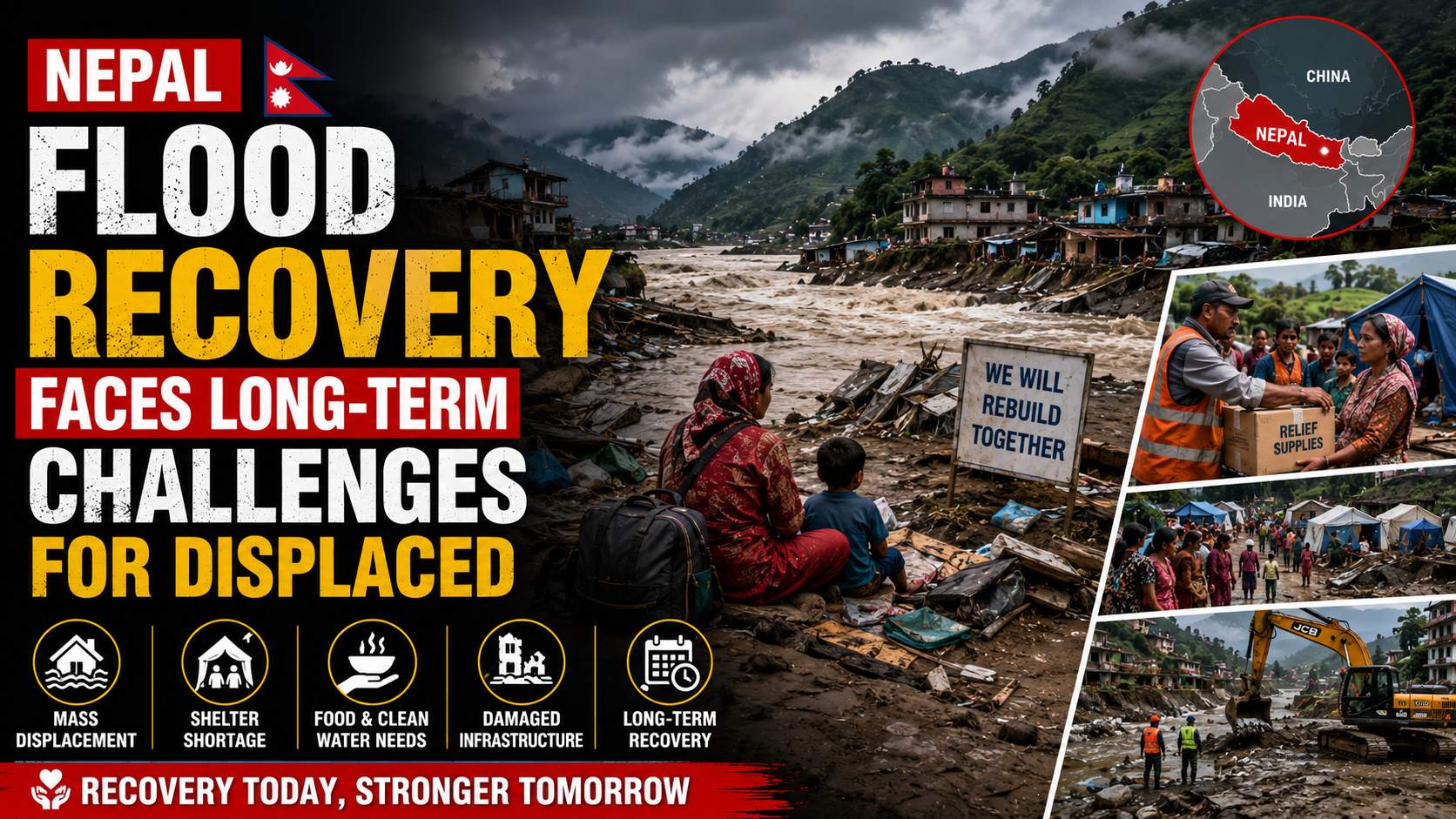
Over 300,000 people are estimated to be displaced nationwide. They seek refuge in makeshift camps, schools, and community buildings. These displaced populations face immediate challenges. These include shelter, sanitation, and access to clean drinking water. This raises concerns about potential outbreaks of waterborne diseases. Agricultural lands, the backbone of Nepal's economy, have been devastated. Standing crops like rice, maize, and vegetables are completely destroyed. Livestock losses are also substantial, impacting the livelihoods of countless farming families. The long-term recovery for these communities presents significant hurdles. For more on this, see Nepal Flood Recovery Faces Long-Term Challenges for Displaced.
Casualties and Humanitarian Impact of the Floods
The human cost of the Nepal Flash Floods continues to escalate. Authorities struggle to provide definitive figures amidst ongoing search operations. The immediate aftermath has seen a surge in humanitarian needs. This places immense pressure on local and national relief agencies. The psychological toll on survivors is also immense.
Rising Death Toll and Missing Persons
As of July 25, 2026, the Ministry of Home Affairs reported a preliminary death toll exceeding 120 individuals. Over 50 people are still officially listed as missing. These figures are expected to rise as rescue teams reach remote areas and clear debris. Many of the deceased are children and the elderly. They were less able to escape the rapidly rising waters. In a tragic incident in Banke district, a family of six was swept away. Their home collapsed into a swollen river. "The speed of the water was terrifying," recounted local resident Sita Rai. Her own home was partially submerged. "We heard screams, but there was nothing anyone could do." Such stories of loss are sadly common.
The search for missing persons is intensifying. Local communities play a vital role in identifying potential locations. These are places where individuals might have been trapped or swept away. Psychosocial support is also recognized as a critical need. Survivors have witnessed traumatic events and lost loved ones. Therefore, mental health services are crucial for recovery.
Immediate Needs for Survivors and Health Concerns
The humanitarian situation in temporary shelters is dire. Displaced families urgently require access to safe drinking water, food, and sanitation facilities. The lack of proper latrines and waste management systems in overcrowded camps poses a significant health risk. This is particularly true for vulnerable groups. Medical teams report an increase in cases of acute respiratory infections, skin diseases, and diarrheal illnesses. The government and partner organizations distribute ready-to-eat meals, water purification tablets, and hygiene kits. However, the sheer number of affected individuals means supplies deplete quickly. Continued support is essential.
Shelter remains a critical issue. Many families have lost their homes entirely. Tents, tarpaulins, and blankets are in high demand. These protect people from further exposure to the elements. Children, often separated from their parents during evacuations, are particularly vulnerable. Efforts are underway to establish child-friendly spaces and facilitate family reunification. The onset of the monsoon season often brings an increased risk of dengue fever and malaria. This adds another layer of complexity to the public health challenge.
Monsoon Rains and Geographical Factors Behind Nepal Flash Floods
The recent catastrophic events serve as a stark reminder of Nepal's extreme vulnerability to hydro-meteorological hazards. Its challenging geography and the increasing intensity of monsoon rains Nepal has experienced in recent years exacerbate this. Understanding these factors is key to future preparedness.
Heavy Rainfall Patterns and Climate Link
The current deluge began with an unusually intense burst of rainfall. This occurred over the second week of July 2026. Data from the Department of Hydrology and Meteorology (DHM) revealed several stations recorded over 300mm of rain within a 24-hour period. This far exceeds the average for this time of year. "This season's monsoon has been characterized by short, but extremely heavy, downpours," explained Dr. Prem Kumar Singh, a senior meteorologist at the DHM. "Such concentrated rainfall saturates the soil rapidly. This leads to surface runoff and flash floods, even in areas not typically considered flood-prone."
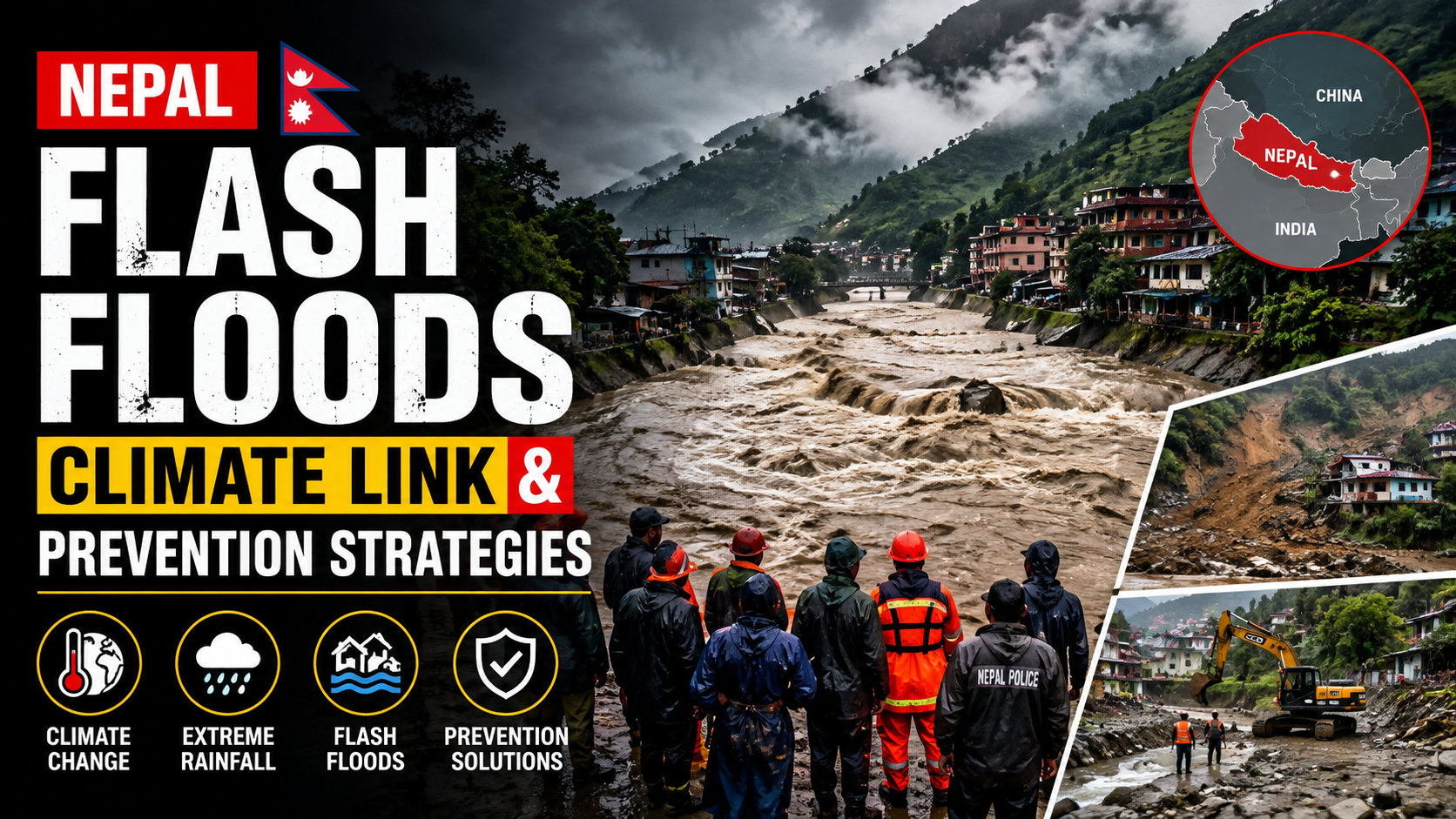
The Bay of Bengal, a primary driver of the South Asian monsoon, has seen a series of low-pressure systems developing. These push moisture-laden winds directly over Nepal. These systems, combined with localized convective activity, created a perfect storm for widespread precipitation. The phenomenon aligns with global climate models. These models predict more erratic and intense rainfall events in the region. This suggests a strong link to broader climate change patterns. For further reading on this, consider Extreme Weather Climate Crisis Reshapes Global Futures and Nepal Flash Floods: Climate Link & Prevention Strategies.
Geographical Vulnerabilities and Human Impact
Nepal's unique topography makes it highly susceptible to the impacts of heavy rainfall. The country features a steep gradient. It transitions from the high Himalayas in the north, through the hilly mid-mountains, to the relatively flat Terai plains in the south. This geographical setup means water flows rapidly down steep slopes. It accumulates quickly in river systems. These then swell and burst their banks in the lower plains. This natural process is amplified by extreme rainfall.
Deforestation and unsustainable land-use practices in the mid-hills exacerbate the problem. They reduce the soil's capacity to absorb water. This increases the likelihood of landslides Nepal experiences. The construction of roads and infrastructure without adequate drainage planning further destabilizes slopes. Many settlements, particularly in the Terai, are located very close to riverbanks. This places communities directly in harm's way when rivers overflow. Therefore, a combination of intense monsoon rains Nepal and inherent geographical vulnerabilities creates a recurring cycle of disaster. This necessitates robust disaster preparedness and mitigation strategies to protect lives and livelihoods.
Ongoing Developments and Future Outlook
The situation across Nepal remains fluid and dynamic. Rescue operations continue in many areas. The focus will soon shift more heavily towards immediate relief and early recovery. This includes restoring basic services and providing temporary housing. Long-term reconstruction efforts will require sustained international and national commitment. Building back better, with resilient infrastructure and improved early warning systems, is paramount. This will help Nepal better withstand future extreme weather events.
Frequently Asked Questions
How do Nepal Flash Floods typically affect travel plans and safety for visitors?
Nepal Flash Floods, especially during the monsoon season (June to September), can severely disrupt travel. Roads and highways, particularly the East-West Highway and those in hilly regions, often become impassable due to flooding or landslides. Domestic flights to affected areas might be canceled. Treks in mountainous regions can become hazardous due to swollen rivers and unstable trails. Therefore, travelers must monitor local news and advisories, have flexible itineraries, and consider travel insurance.
What are the safest times of year to visit Nepal to minimize the risk of flash floods?
The safest times to visit Nepal to avoid the peak of flash floods are generally during the post-monsoon autumn season (September late-October to November) and the pre-monsoon spring season (March to May). These periods offer clearer skies, stable weather, and lower chances of heavy rainfall that triggers widespread flooding and landslides. While occasional showers can still occur, they are typically less intense and widespread than during the monsoon.
What should I do if my travel plans are impacted by unexpected Nepal Flash Floods?
If your travel plans are impacted, first prioritize your safety. Follow all instructions from local authorities and your tour operator. Contact your airline or bus company for updates on cancellations or delays. If stranded, seek shelter in a safe, elevated location. Inform your embassy or consulate if you require assistance. Consider activating your travel insurance, as many policies cover trip interruptions or cancellations due to natural disasters. Flexibility and patience are crucial in such situations.
Are certain regions of Nepal more prone to flash floods and landslides than others?
Yes, certain regions are significantly more vulnerable